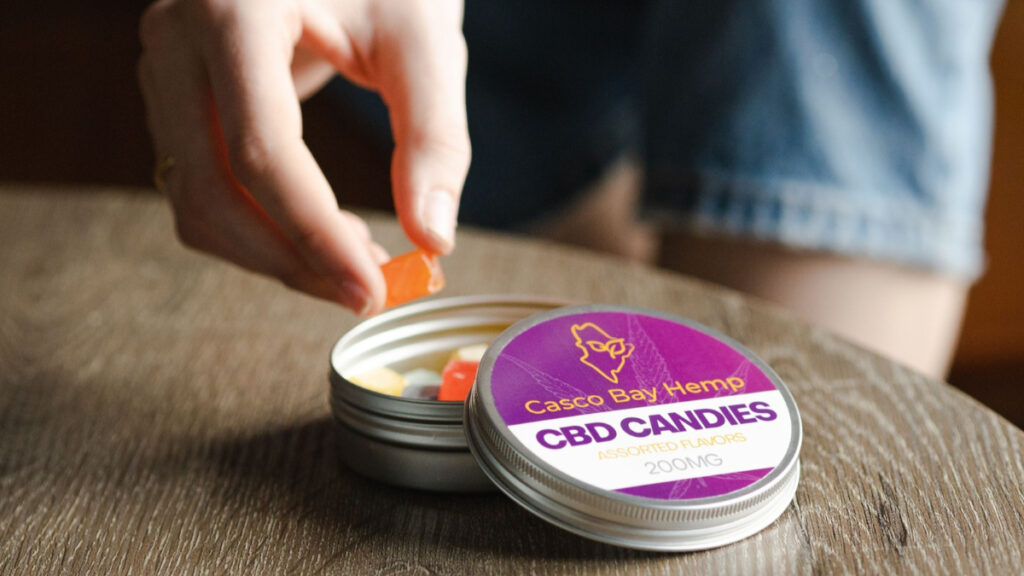
They look like conventional sweets, but they may contain psychoactive substances capable of causing poisoning. Gummies with semi-synthetic cannabinoids are an emerging phenomenon that poses new challenges for public health. In Barcelona, the detection of cases treated in hospital emergencies has prompted a preventive intervention to inform about their risks and avoid new poisonings.
What do these gummies contain?
There are candies or gummies that can be found in grow-shops, which contain semi-synthetic cannabinoids, psychoactive substances that can cause intense and unpredictable effects.
One of these substances is hexahydrocannabinol (HHC), which can be obtained through chemical transformations of cannabidiol (CBD), one of the components of cannabis.
Since April 2025, these cannabinoids have been controlled substances, meaning that their manufacture, distribution, sale, and use are controlled by the authorities.
What effects can they cause and why is it important to be careful?
The consumption of these gummies can cause episodes of nausea, vomiting, anxiety, confusion, paranoia, and other unpleasant reactions. In addition, they are relatively new substances, whose long-term effects are not yet sufficiently understood.
Another important aspect is that its effects can take between 30 minutes and two hours to appear. This delay can lead some people to consume more because they think that the first dose has not had an effect, thus increasing the risk of poisoning. Once they appear, the effects can last for several hours.
For these reasons, their consumption is discouraged. If a person decides to consume them, it is important to wait to notice the effects. If this is your first time consuming them, start with small pieces.
And what about vapes with cannabinoids?
Gummies are not the only format that generates concern. There are also vapes with synthetic cannabinoids, available in different flavors and presentations, whose composition can be difficult to know. The intensity of the effects can vary depending on the amount consumed and individual factors, such as tolerance or emotional state. Like gummies, the use of vapes with synthetic cannabinoids can cause anxiety, confusion or paranoia, so their consumption is also discouraged.
Barcelona responds to an emerging risk
During 2024 and 2025, the Barcelona Public Health Agency (ASPB) received hospital emergency notifications for possible poisoning related to the consumption of gummies with semi-synthetic cannabinoids. These alerts highlighted the need to improve the detection of cases and strengthen preventive information aimed at the population.
Faced with this situation, the ASPB, in collaboration with professionals from the Hospital Clínic and other areas of the Barcelona City Council, promoted an intervention with two lines of action. On the one hand, infographics and videos were prepared for hospital emergency professionals to facilitate clinical care and rapid notification of possible poisonings. On the other hand, informative materials were developed on the risks of gummies and vapes with cannabinoids, especially aimed at young people and foreign visitors, which were disseminated in hostels and hostels in Barcelona in Catalan, Spanish, English and French.
This experience highlights the importance of early detection of risks associated with new substances, sharing information among professionals and providing clear and accessible preventive messages. The ASPB is also working on a scientific publication to analyse the profiles of reported cases and the types of cannabinoids identified, with the aim of expanding knowledge about this emerging phenomenon.
Check out the preventive materials on cannabinoids in foods prepared by the ASPB.